
Quick Answer
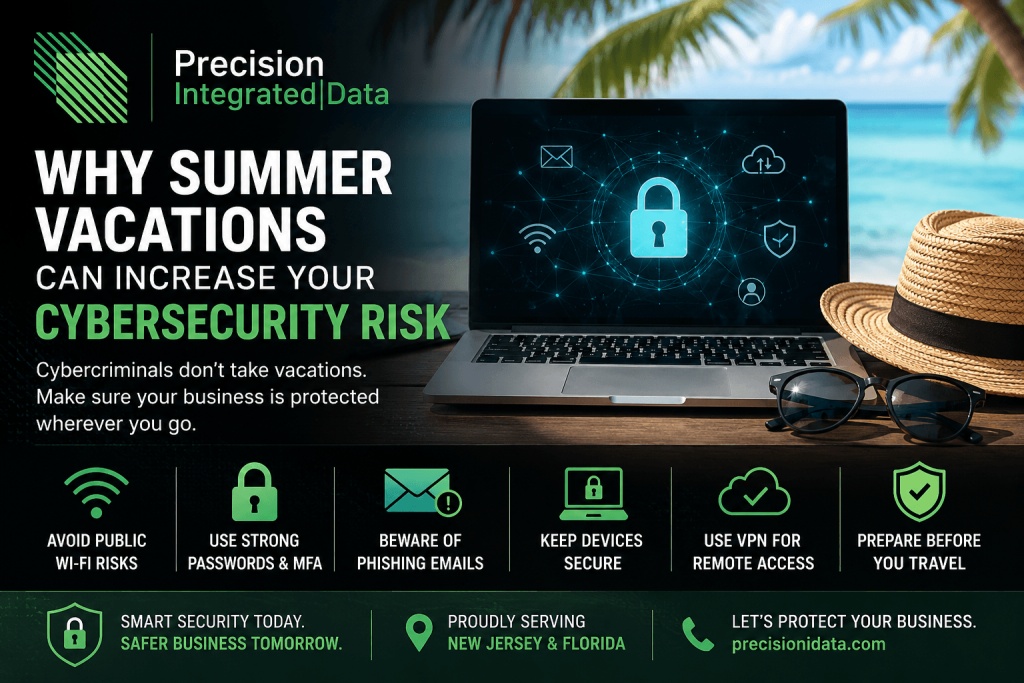
Summer vacations don’t just create opportunities for relaxation—they also create opportunities for cybercriminals. Employees working remotely, checking email on public Wi-Fi, or stepping away from normal security routines can unintentionally expose businesses to phishing attacks, compromised accounts, and data breaches. Taking a few simple precautions before leaving for vacation can significantly reduce your cybersecurity risk.
Summer is a time when many businesses slow down.
Employees head to the beach, take family vacations, or work remotely from hotels, vacation rentals, and airports. Schedules become more flexible, offices have fewer people on-site, and normal routines often change.
Unfortunately, cybercriminals know this too.
At Precision Integrated Data, we often remind our clients that cybersecurity isn’t seasonal—but cyber threats certainly take advantage of seasonal habits.
When people are distracted, working from unfamiliar locations, or rushing to answer emails before heading out on vacation, it’s easier to make mistakes that attackers are counting on.
The good news is that a little preparation can go a long way toward protecting both your employees and your business.
Why Do Cybercriminals Target Businesses During Vacation Season?
Cybercriminals look for opportunity.
Summer vacations create exactly that.
Decision-makers may be unavailable. IT staff may be working reduced schedules. Employees are logging in from different locations using unfamiliar networks and devices.
Attackers know that people are often multitasking while traveling. A fake shipping notification, travel confirmation, or urgent email may receive less scrutiny than it normally would.
They don’t need everyone to make a mistake.
They only need one person.
Is Public Wi-Fi Really That Risky?
It can be.
Whether you’re sitting in an airport, hotel lobby, coffee shop, or vacation resort, public Wi-Fi networks often lack the security protections found in your office or home.
Without proper safeguards, attackers may be able to intercept data or create fake wireless networks designed to capture usernames, passwords, and other sensitive information.
Employees should avoid accessing sensitive business systems over unsecured public Wi-Fi whenever possible.
Using a secure Virtual Private Network (VPN) adds an important layer of protection when remote access is necessary.
Why Are Vacation Emails a Favorite Target?
Travel often creates urgency.
You’re checking messages between flights, responding from your phone, or trying to clear your inbox before dinner.
That’s exactly when phishing emails become more convincing.
Attackers frequently disguise messages as:
- Airline notifications
- Hotel confirmations
- Package deliveries
- Expense reimbursements
- Vacation itinerary changes
- Password expiration notices
When people are distracted, they’re more likely to click first and think later.
Taking an extra moment to verify unexpected emails can prevent a costly mistake.
Should Employees Use Personal Devices for Work?
Sometimes it happens out of convenience.
A personal laptop or smartphone may seem like an easy solution while traveling.
However, personal devices may not have the same security protections, software updates, encryption, or monitoring as company-managed equipment.
Whenever possible, employees should use approved business devices that meet the organization’s cybersecurity standards.
Why Is Multifactor Authentication So Important?
Passwords alone are no longer enough.
Even strong passwords can be stolen through phishing attacks or compromised in data breaches.
Multifactor authentication (MFA) provides an additional layer of security by requiring users to verify their identity through a second method, such as an authentication app or security code.
Even if a password is compromised, MFA can often prevent unauthorized access.
It’s one of the simplest and most effective cybersecurity protections available.
Don’t Forget About Physical Security
Cybersecurity isn’t only about computers.
When traveling, laptops, tablets, and smartphones are frequently left in hotel rooms, rental cars, conference centers, or airport lounges.
A lost device containing company information can become a significant security issue.
Simple habits—such as locking devices, enabling encryption, using screen locks, and never leaving equipment unattended—help reduce unnecessary risk.
A Simple Vacation Cybersecurity Checklist
Before heading out on vacation, take a few minutes to review your cybersecurity habits.
- Install software and security updates before traveling.
- Enable multifactor authentication on business accounts.
- Use a VPN when connecting remotely.
- Avoid accessing sensitive systems over unsecured public Wi-Fi.
- Verify unexpected emails before clicking links or opening attachments.
- Keep laptops and mobile devices physically secure.
- Report suspicious activity immediately—even while traveling.
Cybersecurity Doesn’t Take Vacations
The reality is that cybercriminals don’t slow down during the summer.
In fact, they often become more active because they know businesses are operating differently.
Whether your employees are working remotely from Florida, attending conferences in New Jersey, or simply taking well-earned time off, maintaining good cybersecurity habits helps protect your entire organization.
At Precision Integrated Data, we work with businesses throughout New Jersey and Florida to build secure, reliable IT environments that support today’s modern workforce.
From managed IT services and cybersecurity solutions to network monitoring, cloud services, and business continuity planning, we’re committed to helping organizations stay protected every day of the year.
Should your business be preparing for summer travel, remote work, or growing cybersecurity concerns, contact Precision Integrated Data. We’ll help you strengthen your defenses so your team can enjoy vacation with greater confidence, knowing your business is better protected.